SOLUTIONS FOR HEATING/COOLING AND OTHER CLIMATE-RELATED ASPECTS (AND SOME POWER SAVING)
Depending on the type of heating/cooling units your home has, it can be rather easy, more complicated, or downright impossible to achieve smart control of these. Common for most solutions is that they allow control of the temperature using an app on a smartphone/tablet/computer/etc., often also using voice control, and that they offer opportunities for more advanced programming/functions as part of a more comprehensive system
For some of the solutions discussed here, I have no personal experience (more about my installed solutions under the different rooms/manufacturers), but some main categories are:
- Controlling electric heating panels, for this purpose many different suppliers of the panels have their own dedicated solutions (which rarely are possible to integrate into a generic smart home system). To integrate the control of such devices into a larger system, the solution is usually a smart plug. These can use temperature measurements taken by a suitable sensor to turn on/off the heating and be programmed to adjust the temperature during the day/week. For some more details about smart plugs, see the lighting page, but some commonly used alternatives are offered by Eve, Fibaro, Koogeek, and TP-Link. Mill has even launched a smart plug with in integrated temperature sensor specifically for this purpose.
- Controlling radiators, for which there are different alternative thermostats. Contrary to what is the case in my home country, thermostats are of course very widespread in many countries, thus control units for these is an attractive market. Some of the products are replacement thermostats, that can be placed anywhere in the room, and these then send signals to the radiator. More advanced systems involve replacing the radiator valve with a smarter version. Most of the products offer some type of “learning” so that they adapt the temperature based on when people are home and other parameters. They typically have good opportunities for integration with other components. Some widely used alternatives are from Danfoss, tado, Netatmo, nest, Honeywell, and Eve.
- Controlling underfloor heating (electric or water-based), is another are where there are quite many solutions on the market. Some of these have in-built temperature sensor and cannot take temperature measurements from other sensors (meaning these are not ideal for replacing a thermostat placed outside the room being heated, which is often the case for, e.g., bathrooms. Others offer the choice of temperature measurement using either the integrated sensor, from an underfloor sensor or an in-room sensor. From my own experience, I know that the thermostat from tado has no connection for an underfloor sensor, which is why I ended up with several thermostats from Heatmiser, with an alternative from Heatit.
- Controlling air conditioner/heat pump/inverter, which is an application area where there were few suitable solutions for quite a while. By now, however, there are several alternatives. Many of the manufacturers of the units themselves have control solutions, e.g., Panasonic. We have a Panasonic inverter and in Norway, the alarm company Verisure even offers a control unit that integrates into their smart home system, but unfortunately not for our specific model. Generic solutions are delivered by e.g., Sensibo, tado and AirPatrol.
- Controlling a fan, be it ceiling, floor or table fan. For the latter two types, I have not undertaken any active investigations of possible solutions, but I assume the most obvious is a smart plug, as outlined above for electric heaters. A smart plug can be remote controlled and programmed to turn on/off automatically based on temperature, motion, people present, etc. And some smart fans have been launched, see more under smart “air treatment” device. For our ceiling fan, we eventually ended up using a Fibaro Single Switch, more about this under master bedroom, but there are many different possible solutions. First of all, you can replace an existing “dumb” fan with a more modern version. As far as I can tell, this is a product category where it seems there are mostly North American offerings available that have truly integrated smart control, either for Apple Home, Amazon Alexa or Google Assistant (from manufacturers like Hunter (opens in a new window) and Haiku). There are, however, some smart fans for European systems well as many fans that work elsewhere in the world that are controlled by a traditional remote control. For such fans, there are different ways of installing smarter control which replaces the old-fashioned remote control, e.g., from Bond, Insteon (opens in a new window) and Sonoff. Also, for ceiling fans, a smart plug might work, unless the fan is connected directly to a wall switch. In the latter case, a smart wall switch can work, but depending on whether the current wall switch also controls light in addition to the fan itself, you might have to resort to some workarounds (as we had to for the master bedroom fan).
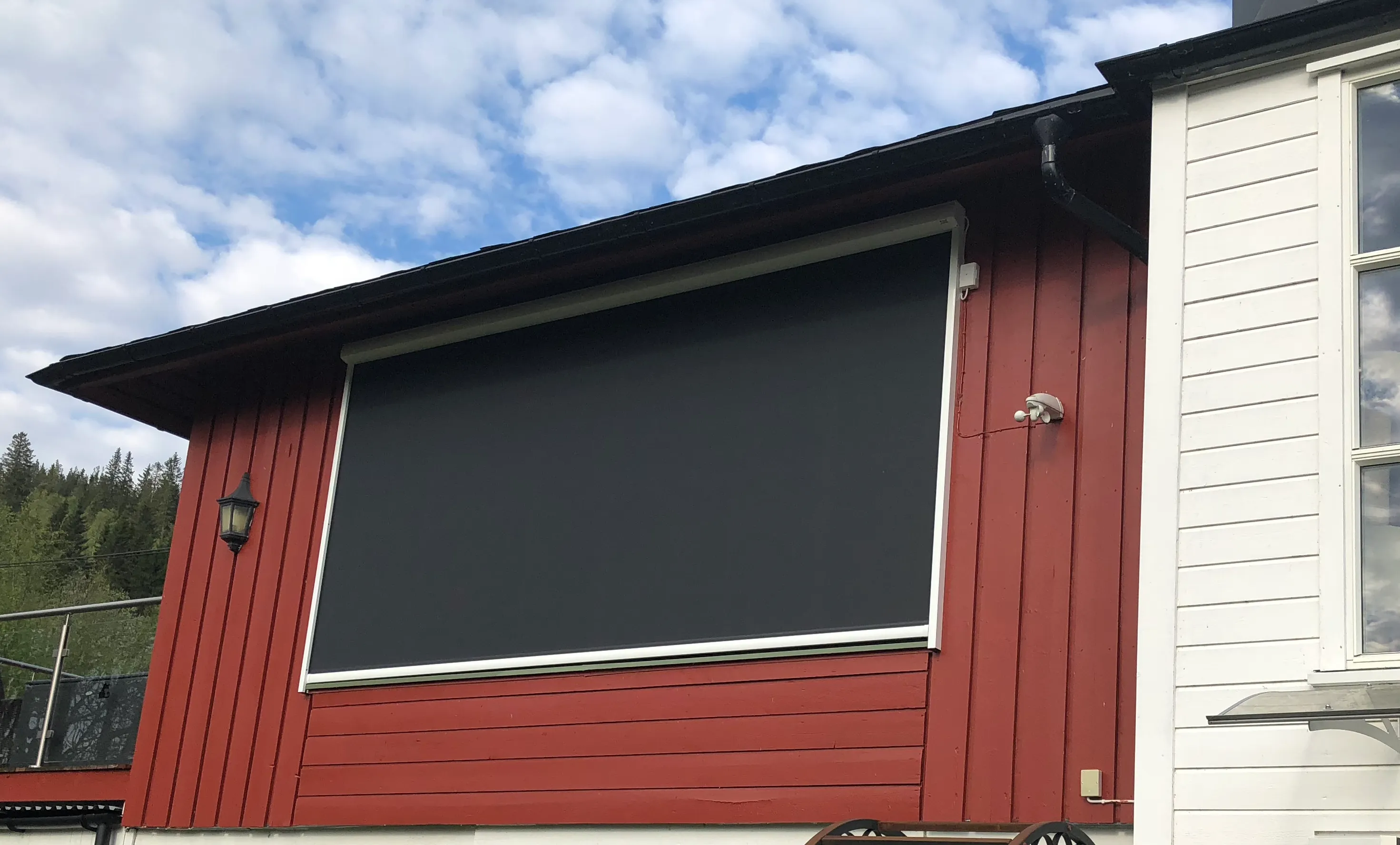
- Controlling window coverings like sun screens, blinds, etc., which is a varied category. In my case, controlling an external sun screen proved to be among the most challenging projects in the whole house, which was finally solved using a Fibaro Roller Shutter (I have version 2, while the latest version is 3) and Z-Wave base station from Samsung SmartThings. But there are, also here, many ways to achieve smart control. The most comprehensive solution is of course to replace old coverings with smart versions, e.g., from Lutron, etc. By the end of 2018, most solutions of this type are rather expensive, but IKEA launched a less expensive alternative in the spring of 2019. The next option is to add smart control to existing coverings. Many of these already have native remote controls or support app control from smart phone/tablet/etc. A large manufacturer of such solutions is Somfy, with a series of products based on their so-called TaHoma base station. To which extent such products are compatible with different ecosystems varies and with additional support being added (Somfy has for example announced coming Apple Home support, but not yet launched it). A last type of solution is a smart relay installed in the wall box behind the current wall switch. Some alternatives are offered by Fibaro and Qubino.
As for the other categories of smart technology for the home, an important factor when choosing your type of solution and specific product will be integration with the rest of the system. Some of the products support a number of protocols/ecosystems, other are more limited or even completely proprietary and not possible to combine with other components. It is therefore a key to investigate which solutions are feasible for your situation and try to follow a long-term, holistic plan before starting to invest.
More or less independent of which climate control solution you have and which smart control system you add on top of this, you will typically achieve a number of benefits:
- Power saving, this is probably the strongest motivation for implementing smart climate control, where adjusting the heating/cooling based on time of day, when people are home, etc. can produce significant savings. This is especially true if your current solutions were installed some time ago.
- Remote control, allowing adjusting temperature and control programs whether you are at work, on vacation, etc.
- Integration with other components, an area with many opportunities, e.g., that heating is turned off when sensors detect that a door or window is opened, presence sensors detect when there are people in different rooms/areas of the house, etc. There are many different sensors available that can serve different purposes in a smart home and also be utilized for climate control; several types of motion sensors can measure temperature, different sensors measure light levels (which can give input to sun covering solutions), contact sensors can inform the system when doors/windows open or close to avoid running cooling/heating counteracted by outside air, etc.
Another category worth mentioning under climate control are dedicated devices for measuring/monitoring air quality/climate parameters indoor and outdoor. There are quite advanced weather stations, perhaps mostly aimed at hobby meteorologists, but for integration into a smart home it is probably more relevant looking at alternatives from Netatmo (offering both a more complete weather station and a sensor for indoor air quality) and Eve. These give measurements of weather conditions and air quality, factors interesting to watch in and of themselves, but these can also be used to control other devices.
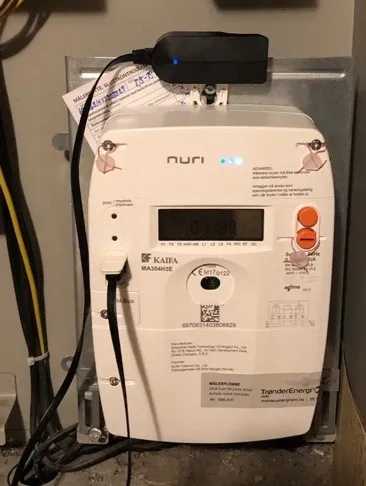
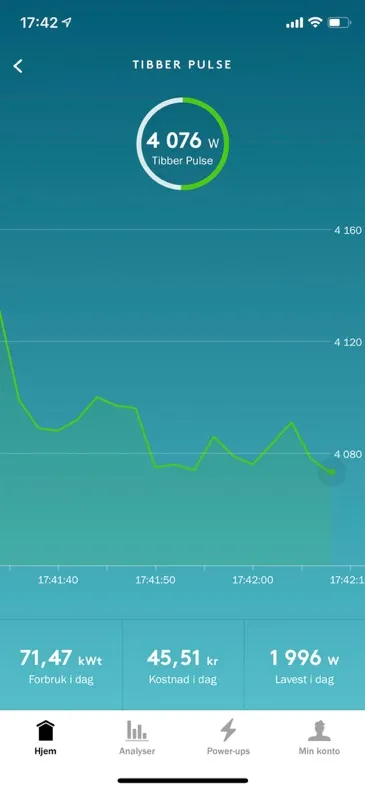
Finally, I include something that doesn’t quite fit in any of the categories I have defined, a small device called Tibber Pulse. It was recently installed in our house, connected to the HAN port of the new smart electricity meter, see picture below (notice that to use the port, you have to get your local grid company to open it). Pulse reads the power consumption and shows it in real time in the Tibber app, see screenshot below. One could argue that this is more of a gimmick than of real use, at least as long as there is no automatic control turning off devices that use a lot of power in periods with high prices, but it does of course make it possible to see the consumption yourself and control it, and it raises awareness of your own power consumption.