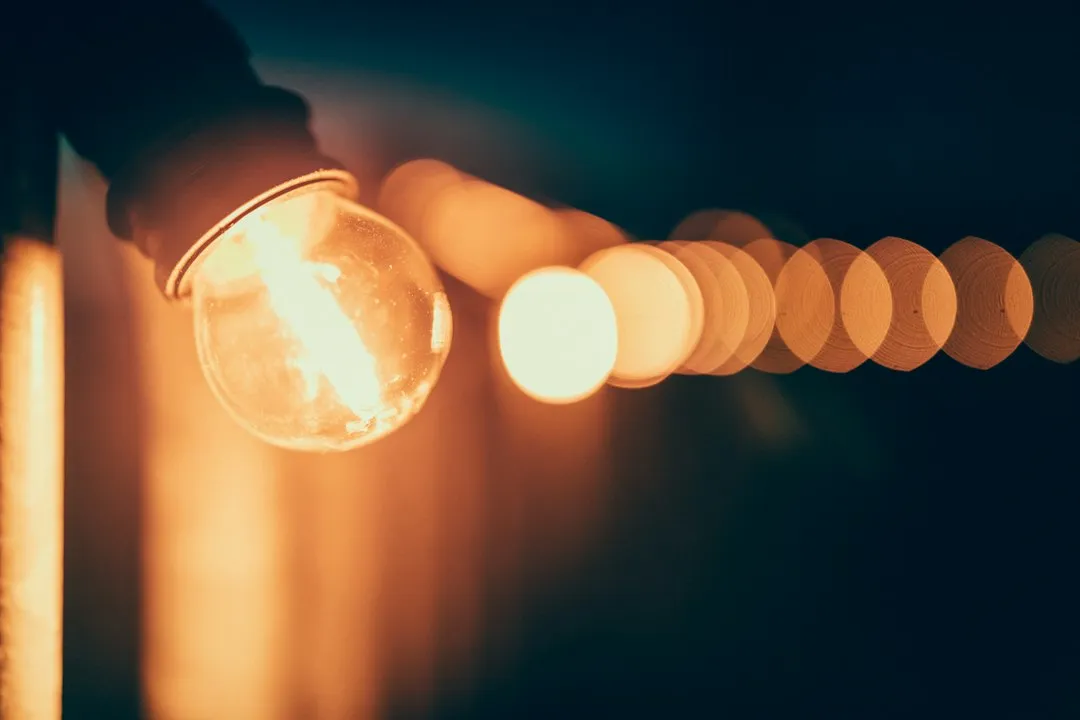
Smart light bulbs and light sources are the easiest way to start a smart home
With a slight reservation regarding smart plugs (where some versions can work completely on their own, without any need for a base station) I believe I am right in the claim of this heading. Sensors and smart switches presuppose something to control and smart lighting is typically both the most visible smart home system in any house and the simplest to get startet with. This does, however, not mean that it is a category where deciding on the products to buy is easy, for the selection of products and vendors is wide and there are several considerations to make:
As the heading of this page indicates, there is a choice between smart light bulbs (to replace existing bulbs) and lamps/light sources with smart functionality (which can either replace existing lamps or become new light sources in the home).
For smart light bulbs, there are a broad range of versions to choose among:
A main factor distinguishing these is of course the socket type (not all sockets used in traditional bulbs are available, but sockets like GU10, E14, E27, etc. are sold by many vendors)
Another factor to consider is the size and shape of the bulb, again with many alternatives available, from quite traditional to more “blingy”
A main dividing line goes between bulbs that can only produce white light (usually in different tones/color temperature) and colored light (often in millions of hues)
Finally, there are also smart bulb sockets, which can be installed between an existing lamp and existing “dumb” bulb to allow controlling this (this type of control is more limited that what can be done with a smart bulb, but is an alternative where it is not a good option to replace an existing lamp or bulb)
For smart lamps/light sources, the variety of products is perhaps even greater, with a number of issues to consider:
An important factor is whether you want indoor lighting or outdoor lighting, for both types different manufacturers offer a number of alternatives
Usage/location for installation, e.g., ceiling lamp, desk lamp, kitchen light, etc., there are many options out there
Type of light source, where the market offers a surprising range of smart lights, from traditionally-looking lamps (with a smart bulb in an otherwise “dumb lamp” or with the control built into the lamp), light strips, downlights, products with a core functionality and smart lighting built in (e.g., mirror with light for a bathroom), etc.
Power supply, many smart lamps come with a power plug that simply allows plugging it into an outlet, while others must be connected to power wires (typically in cases where an existing wall switch controls a light source and this is replaced with a smart version)
For both these main types, as for any type of component for a smart home, the following issues must be considered:
Which is platform/ecosystem is supported
Which communication platform is used (this affects the distance that is possible between components and still maintain sufficient connection)
If/which base station that is required–as far as I know, all smart bulbs require some type of base station while many smart lamps/light sources can be used simply through the manufacturer’s app
It is verging on unfair to highlight any single manufacturers in this category; a quick review of the list of producers will reveal that a large number of companies compete for this market. Nevertheless, it is difficult to get around a couple of companies that both have a large market share and represent a rather uncomplicated and flexible gateway into the smart home; IKEA Trådfri and Philips Hue. Reading about our installed solutions it is easy to recognize that these are the dominating lighting suppliers in our home, so it is not a coincidence that I choose to mention them, but it is not a coincidence either that we ended up with them. IKEA Trådfri might not have the absolutely broadest selection, but is less expensive than most of the competitors, while Philips Hue both has a very broad range of products and offers everything from basic functionality to far more advanced opportunities.
In our smart home, we have installed a large number of smart light bulbs/sources throughout the house (see the individual room for more detailed information about the physical setup and programming of the solutions):
Office, here we have both a smart bulb from IKEA Trådfri and a smart desk lamp from Mi
Library, here are smart light bulbs from both IKEA Trådfri and Philips Hue as well as smart downlights from Philips Hue
Conservatory, here there are five GU5.3 bulbs from respectively Smart Life/Tuya and Philips Hue
Living room, this room has a rich selection of smart bulbs from IKEA Trådfri, Philips Hue, and Nanoleaf as well as smart light sources (light strip, cabinet lamps) from the same manufacturers
Kitchen, smart light bulbs from Philips Hue and smart light sources (light strips and drawer lights) from both IKEA Trådfri, Philips Hue, and Nanoleaf as well as smart light strips with motion sensor from an unknown producer
Bathroom upstairs, one smart bulb from Philips Hue
Master bedroom, has several smart bulbs and smart wardrobe lights from IKEA Trådfri
Stairs, four smart bulbs and a light strip from Philips Hue and a smart bulb from Yeelight
Hallway/Outer hallway, a number of smart bulbs from both Philips Hue
Basement living room, one Philips Hue smart bulb
Guest room 1/Guest room 2, both these rooms have smart bulbs in ceiling lamps and bedside lamps, from IKEA Trådfri and Philips Hue
Outdoor shed, only one bulb from Philips Hue
Tool shed, smart light bulb in a wall lamp
Outdoor, here we have a large number of smart bulbs from IKEA Trådfri and smart bulbs/outdoor lights from Philips Hue
One might think that the usage areas for smart lights are obvious, but also here it is possible to discern some distinct applications with somewhat different sets of benefits (several of these are identical to what can be achieved using either smart switches or smart plugs):
Smarter control/remote control of lighting
One of the main purposes of both smart light bulbs and smart light sources is that they are connected online and can thus be controlled (turned on/off/dimmed/changed color) in different ways–from an app on a computer/smartphone/tablet/watch, with voice control using smart assistants or smart switches/remote controls. In many ways, this is pure laziness, but the benefits typically materialize in two ways:
- Controlling lights without having to use physical switches, from anywhere in the home.
- Remotely controlling lights, also when away from home. This provides additional opportunities; if lights have inadvertently been left on, they can be turned from anywhere, lights can be turned on/off to fool people into believing someone is home even when on vacation, etc.
For more basis control of lights this way, there is really no programming involved, at installation and setup, the lights become available for control.
Programming/automation of light control
This is one level up in complexity and can be achieved through smart lights, but also using smart switches or smart plugs. The principle is the same in all cases–one utilizes the remote control functionality to set up more or less complicated rules for when lights should be turned on/off. Some examples are:
- Time-based light control, so that lights turn on/off at fixed times or based on the movement of the sun
- Light control based on signals from sensors, typically motion sensors or door/window sensors, which of course require the lights to be remotely controlled (see descriptions of usage areas for such sensors in each sensor’s page)
- Light controls based on location data (typically from a smartphone), so that lights turn on when the first member of the household arrives to an empty house or when the last person leaves the house
Programming of simple rules based on time, sensor signals, or location data can fairly easily be set up in for example the Home app, while more advanced rules involving conditions might require more powerful apps/platforms to set up.
Integration of lighting in more extensive scenes/programs
This is not principally much different from the simpler forms of automations mentioned above, but involves that lights are included in more extensive collections of actions that can be started with one command. Such a scene/program can be activated manually, from a smartphone, tablet, smart assistant, etc., or automatically, like outlined above, based on time, sensor, location, etc. A couple of examples of such “scenes” can be:
- “Good morning” scene, activated at a fix time every weekday, can turn on selected lights throughout the home, turn on the radio, start the coffee machine, and turn up the temperature
- “Goodbye” scene, which is activated when the last person leaves the home, turns of all/most lights, lowers the temperature, turns off on any radio/TV that was on, and locks the front door
Such scenes can be programmed in the Home app or similar apps.
Power saving
This is not a usage area as such, but rather a benefit of smart light control. Partly are all smart light bulbs/sources based on LED technology, which uses less (in many cases significantly less) energy than both more modern and especially old-fashioned light bulbs, and partly will smart light control mean that the lights are on less time than before. In sum, this can produce considerable savings.
Physical installation
In this category, the installation process depends heavily on which type of component to be installed:
- Smart light bulbs (or smart sockets) are obviously very easy to install, by replacing the old bulb with a smart version.
- Smarte lamps/light sources with power plugs are also fairly easy to install, i some cases it is simply a matter of plugging in the power plug and placing the lamp in the desired location, in other cases the lamp must be mounted, typically using a couple of screws or double-sided tape (light strips, for example, are fitted using double-sided tape and these might also need cutting down the length to fit).
- Smarte lamps/light sources that must be connected to power through wiring is somewhat more complicated (and in some cases the work must be done by an electrician), but also for these, the installation work is fairly basic as long as a suitable location can be found where there is power available.